Report on the international conference jointly organised by the Hungarian Association of Environmental Enterprises (HAEE) and the International Solid Waste Association (ISWA) (Budapest, HUNGEXPO, 8 October 2026)
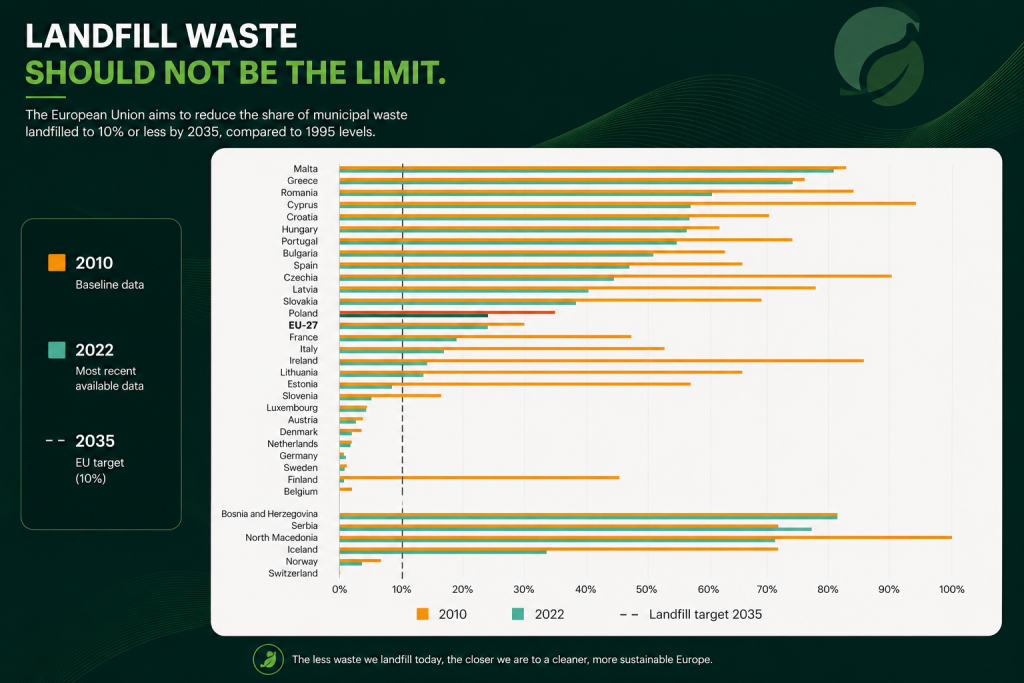
Countries across Central, Eastern and South-Eastern Europe face several closely interconnected circular-economy challenges: they must reduce the amount of waste disposed of in landfill, meet the European Union’s circular economy targets, and recover as many valuable materials and rare earth elements as possible from different waste streams. While EU legislation requires the proportion of municipal waste disposed of in landfill to fall to 10% by 2035, the current rate in the region’s Member States ranges from 40% to 80%; in some areas, even organised collection and compliant landfill facilities are still lacking. Against this backdrop, the Hungarian Association of Environmental Enterprises (HAEE) organised its international conference entitled “Landfilling: Last Resort?” on 8 October 2026 at HUNGEXPO, as part of the ENVIRONTEC powered by ÖKOINDUSTRIA trade exhibition.
The conference was based on the premise that landfilling can become a genuine last resort only if the entire waste-management system functions effectively and every stakeholder applies the waste hierarchy consistently. The participants therefore sought the answer not in a single technology, but in the integration of separate collection, predictable material flows, adequate sorting and treatment capacity, reliable data, and modern landfill operation. The programme ranged from the regulatory framework and forthcoming EU requirements to monitoring, leachate and methane management, fire and odour risks, operational issues, and long-term financing. The speakers from twelve countries added particular value, enabling Hungarian professionals to learn not only from Western European examples but also from South-Eastern European countries facing similar challenges. The question mark in the title remained with us throughout the day: most speakers did not dispute the need for landfills, but examined how their role could be reduced so that only residual waste that cannot be treated by other means is deposited there, while a modern landfill serves as the safe endpoint of a circular system.
From targets to implementation
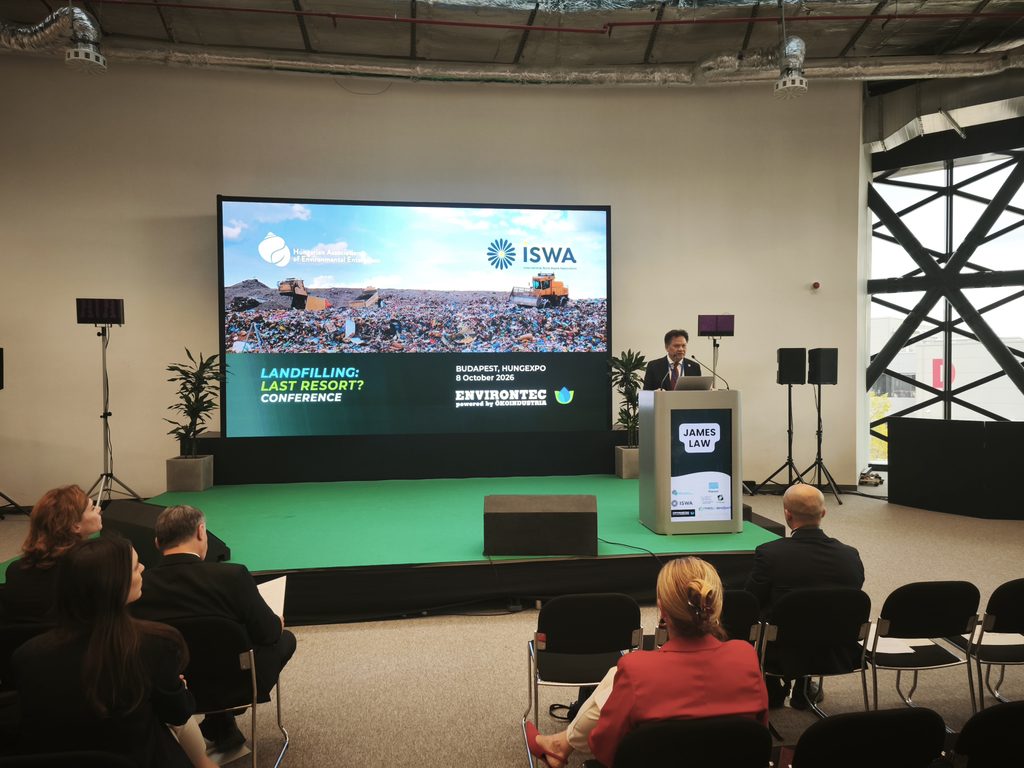
James Law, President of the International Solid Waste Association (ISWA), opened and concluded the morning programme, with his two presentations providing a framework for the day. His answer to the question posed in the title was unequivocal: in the long term, landfilling must indeed become the last resort; the question is how we get there. Lasting progress is rarely brought about by a single law or technology. The journey begins with eliminating open dumps, establishing reliable collection, and operating landfills professionally; leading countries also built their high recovery rates on these foundations. A modern landfill is therefore not the destination but a milestone, and the gap between targets and reality requires urgent, professional and comprehensive action across the region. In his closing presentation, he framed the same issue from a financing perspective: landfills are not closed by targets, but by funding, institutional capacity and long-term political commitment. Operators are expected simultaneously to close landfills, build new treatment capacity and expand separate collection, while financing frameworks remain outdated. Drawing on EU examples, he identified five pillars: fees that cover real costs; landfill levies whose revenue is reinvested; public funding; private capital attracted by predictable regulation (“investors are not afraid of risk, but of uncertainty”); and climate finance linked to methane reduction.
he new ministry’s vision
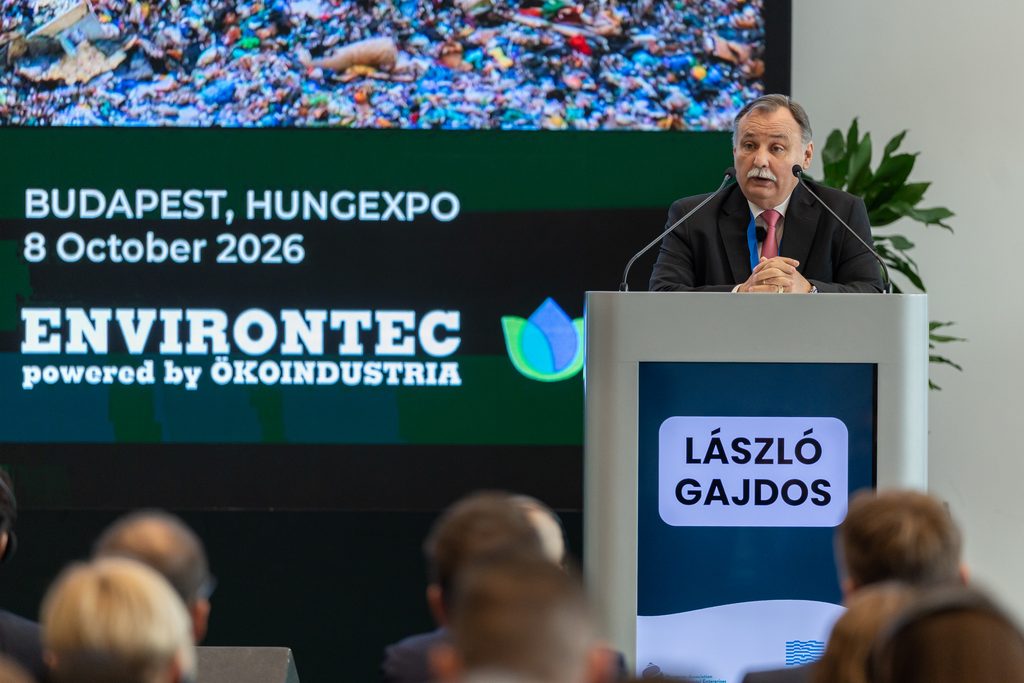
László Gajdos, Minister for the Living Environment, illustrated Hungary’s situation with figures in his opening address. In 2024, 53% of municipal waste, nearly 1.7 million tonnes, was sent to landfill, equivalent to roughly 170,000 ten-tonne truckloads. The recycling rate was 33%, while the EU target was 50% by 2025 and is 65% by 2035. According to the Minister, many environmental problems are engineering tasks awaiting solutions. He cited the deposit return system as an example: around 90% of the beverage packaging covered by the scheme returned to the loop within a short period because simple rules and accessible infrastructure gave value to what had previously been discarded. The same logic must be extended to biowaste, textiles, tyres, and waste electrical and electronic equipment. His central message was that we must work in “two worlds” at once: remedying the environmental debts of the past while building a system that does not create new problems. The ministry is therefore reviewing the waste-management system to reduce landfilling, return more materials to the economy, and simplify separate collection. Its aim is for Hungarian engineers, researchers and businesses to develop technologies within a few years that can also be deployed in other countries.
Regulatory framework and regional overview
This session examined the framework and starting point from which the region must move towards the 10% target. René Rosendal, Chair of the ISWA Working Group on Landfill, presented the work on the forthcoming EU Best Available Techniques reference document (BREF) for landfills. The new rules will establish uniform minimum requirements for landfill operation, emissions and aftercare, which, according to the speaker, will make landfilling more expensive even in leading countries. Given the enormous difference in technical standards between Northern European and regional landfills, he was concerned that requirements applied immediately and uniformly to all could leave some countries further behind. He therefore recommended a phased introduction and a longer preparation period for Central and Eastern European countries.
Dr Krisztina Wegner, Senior Environmental Lawyer and Circular Economy Expert at First Development Ltd., emphasised that extended producer responsibility (EPR) is not merely a payment obligation, but an operational system. Producers must cover the real costs within transparent rules and with performance-based incentives. If EPR is reduced to a revenue-collection mechanism, responsibilities become blurred and no one has an incentive to improve efficiency. As a solution, she called for an “EPR 2.0” approach that is consistent across all waste streams and built on real data and practical operation.
Aleksandra Vučić Anić, Head of the ISWA South-East Europe Regional Development Network, warned that regional statistics are often unreliable and favourable official data frequently conceal operational difficulties. Her analysis of Croatia showed that a significant share of the waste disposed of in landfill is itself residue from waste treatment and cannot currently be recovered in any way. Landfills therefore remain necessary even in a circular economy. This is also demonstrated by Croatia, where a former policy aimed at closing every landfill has now been followed by a renewed need to construct landfill capacity.
Technologies and practical solutions
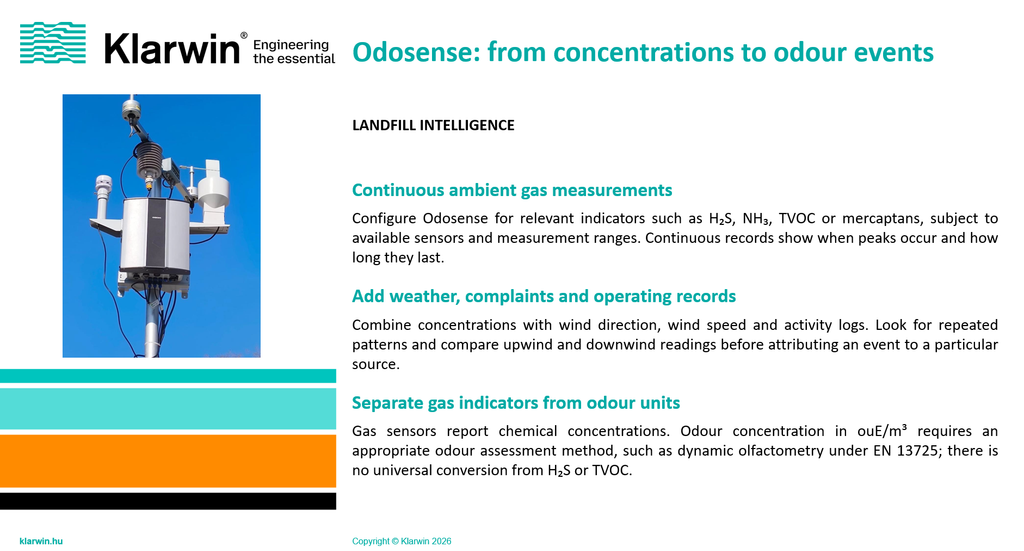
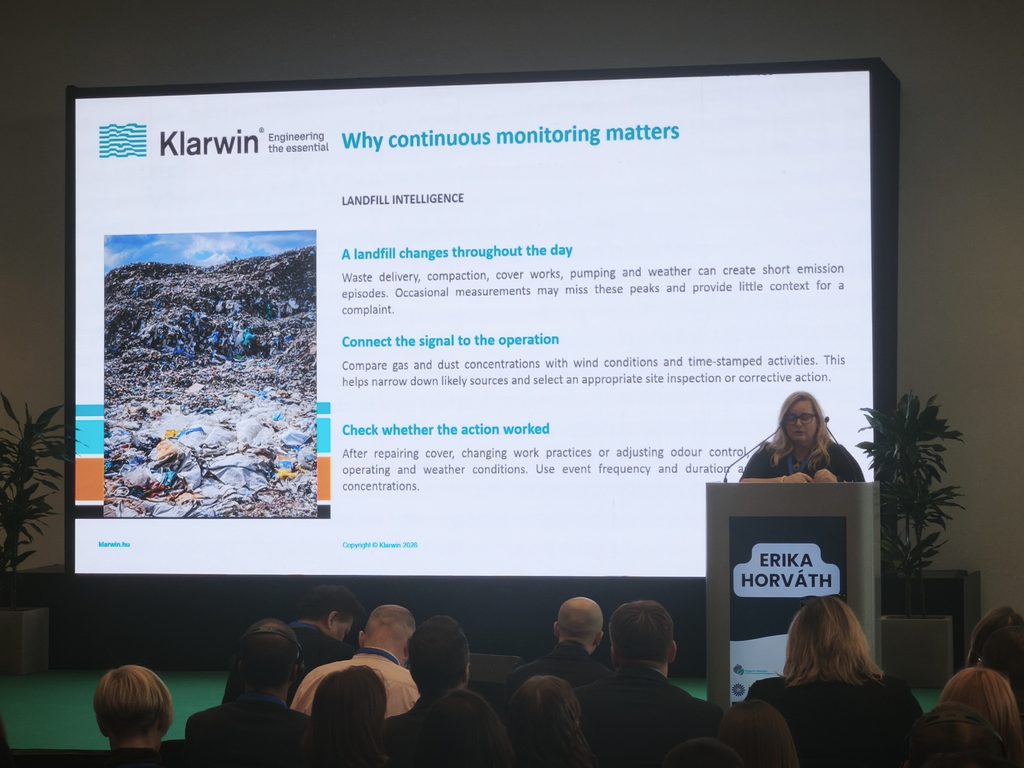
Erika Horváth, Managing Director of Klarwin Hungary Ltd., a company specialising in leachate treatment, began from the observation that although a landfill may operate properly most of the time, short emission peaks causing odour complaints, for example during waste delivery, covering, leachate pumping or changes in wind direction, can easily be missed by occasional measurements. Continuous, real-time monitoring records the start, concentration and duration of an event; when compared with operational logs and weather data, it can also identify the cause. Since methane and carbon dioxide are odourless, hydrogen sulphide, mercaptans and ammonia can indicate the source of an odour. A single instrument is therefore insufficient: multiple measuring points, meteorological data, dust and noise monitoring, and regular tracking of leachate quantity and quality are required. References from Romania, Lithuania and Croatia show that continuous monitoring, as part of everyday operations, can support complaint investigation and the targeted use of resources.
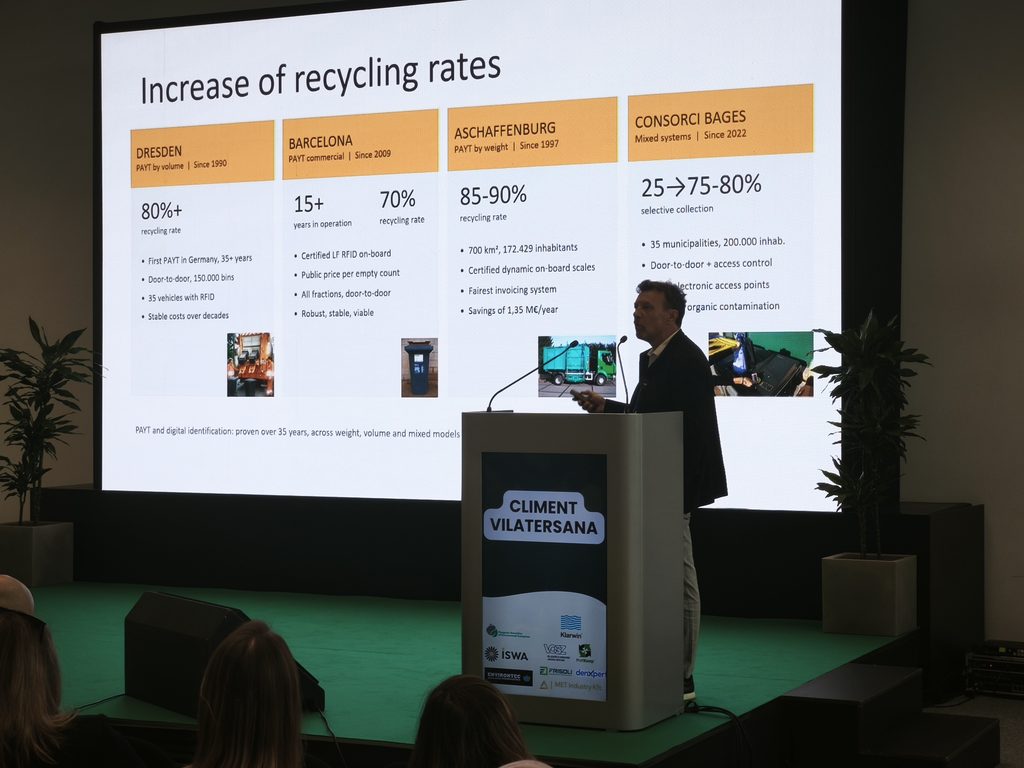
After the coffee break, the technology session examined the full lifecycle of a landfill and the tools available to replace landfilling. Climent Vilatersana, Waste Strategy Director at MOBA Mobile Automation AG, presented the digitalisation of waste collection and pay-as-you-throw (PAYT) systems. Dresden has achieved a recovery rate of over 80% through quantity-based charging for more than 35 years, while in one Spanish region the introduction of access control in 2022 increased separate collection from 25% to 75%. According to the speaker, the technology is mature; implementation requires political courage above all.
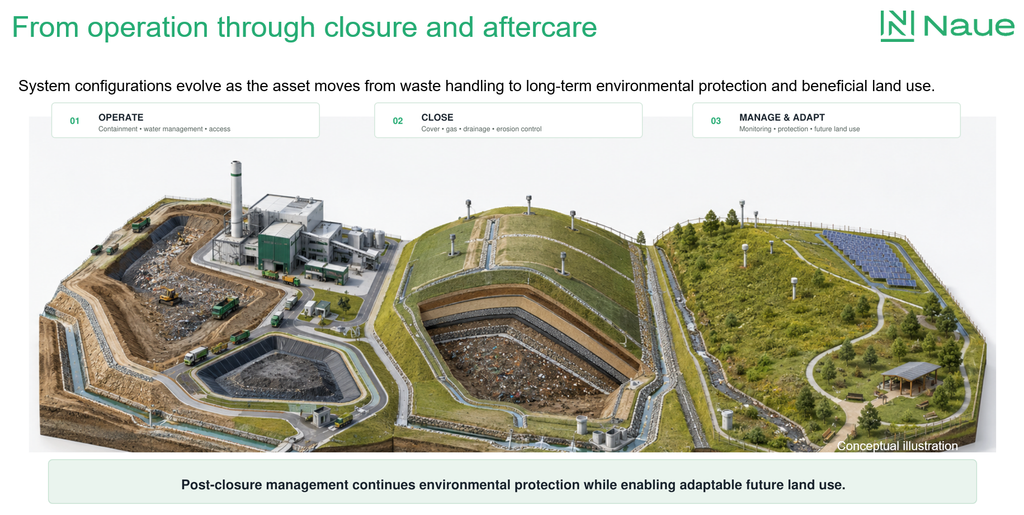
Dr.-Ing. Jovana Husemann of the NAUE Group approached landfill closure and aftercare through integrated geosynthetic systems. She stressed that sealing, drainage, filtration, reinforcement and erosion control can ensure long-term environmental protection and climate resilience only when designed together. Using Osojnica in Croatia as an example, she presented the remediation of a landfill covering approximately 3.2 hectares and containing around 475,000 m³ of waste: 150,000 m³ of waste was relocated and a retaining wall up to 22 metres high and 242 metres long was constructed; the project, completed in 2021, cost approximately EUR 5.2 million. At the Am Knochen landfill in Germany, the reinforced soil structure, almost 21 metres high, was built with 62 horizontal geogrid layers. The core message was that no sealing element is sufficient on its own without the coordinated design of the embankment, drainage and slope stability.
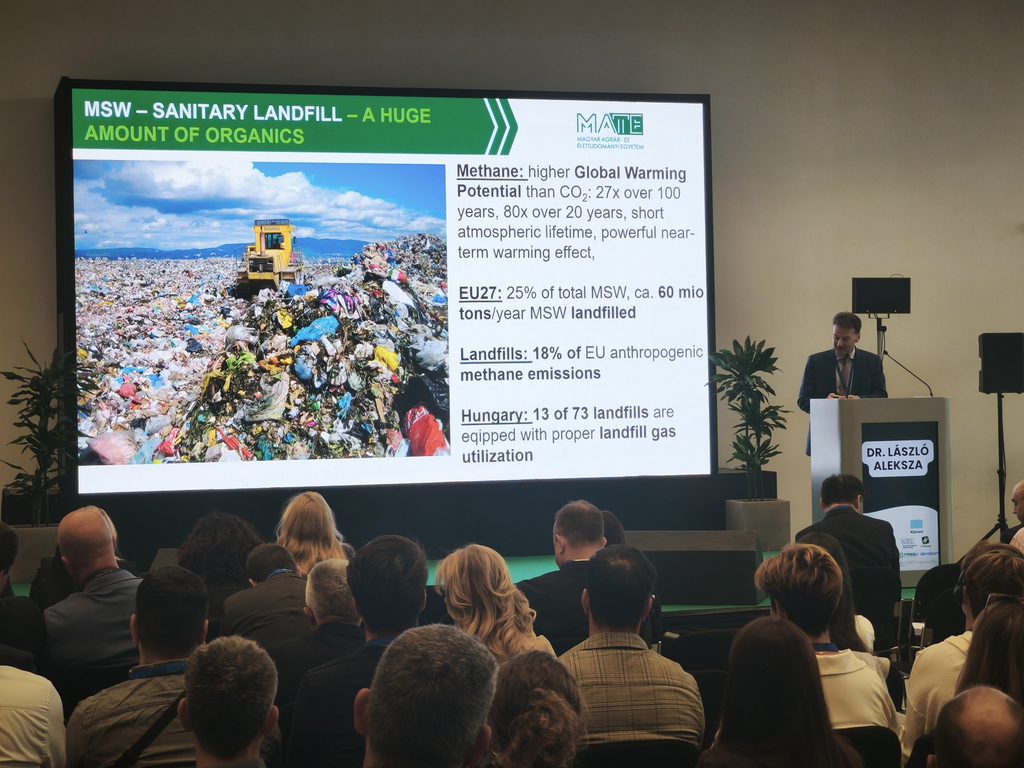
Dr László Aleksza, Associate Professor at the Hungarian University of Agriculture and Life Sciences (MATE) and Managing Director of Profikomp Ltd., examined landfill gas from the perspective of biowaste. In a landfill, organic matter decomposes uncontrollably for decades, and on average only around half of the methane generated can be utilised. In a biogas plant, however, the same process takes place under controlled conditions in just a few weeks. He estimated that Hungary’s biodegradable waste could produce approximately 100 million m³ of biogas per year. His message was therefore to keep biowaste out of landfills wherever possible and to regard methane as an opportunity.
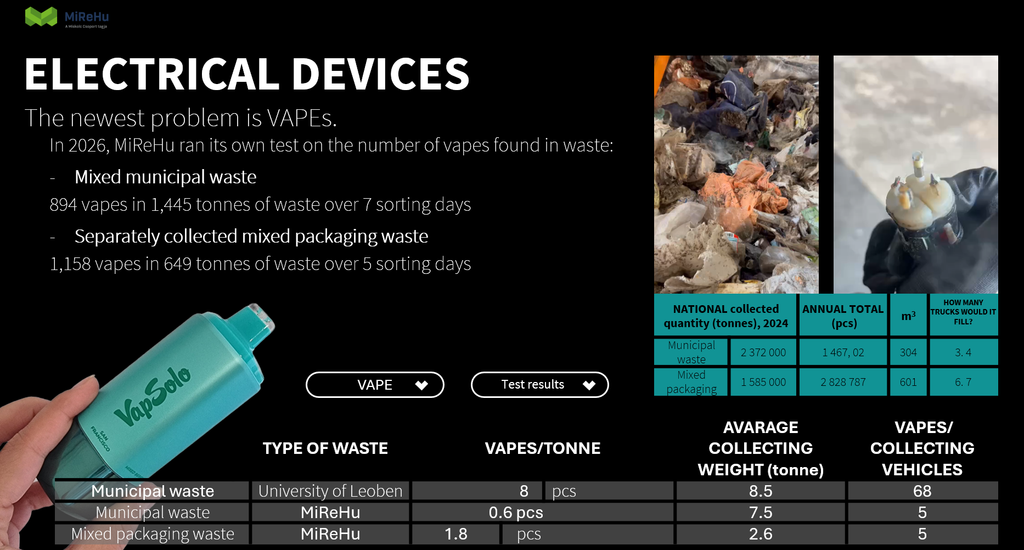
Roland Ladányi, Managing Director of MiReHu Nonprofit Ltd., spoke about fires in the waste industry, whose most important sources are batteries and disposable e-cigarettes entering waste streams. He also highlighted the lack of reliable Hungarian statistics and the very limited availability of fire-damage insurance for waste-treatment facilities.
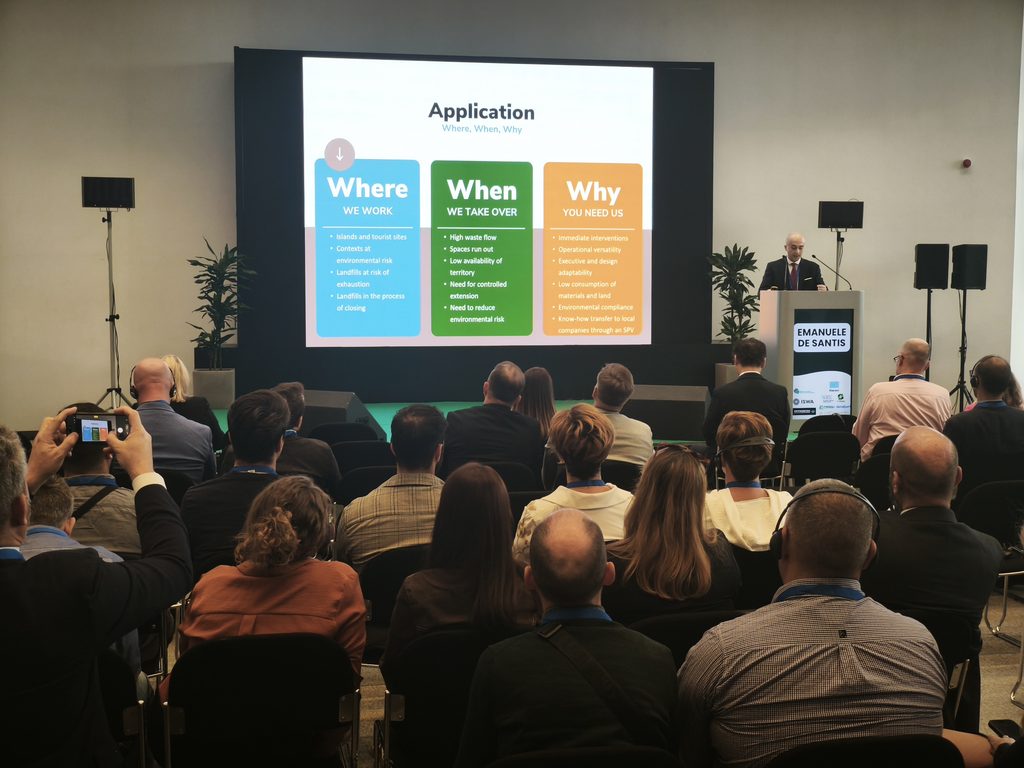
Emanuele De Santis, Export Manager at Frisoli S.r.l., presented an Italian company’s landfill aftercare and soil-regeneration work. According to the speaker, if landfilling truly is the final solution, existing capacity must also be managed carefully. Their approach is based on technical and financial flexibility: the landfill is expanded in stages in line with actual needs. Their principle is to build today what is needed today, while preparing for what will be needed tomorrow.
Prof. Dr Gábor Mucsi, Dean and University Full Professor at the Faculty of Earth and Environmental Sciences and Engineering, University of Miskolc, demonstrated how mining expertise can be applied to waste through “landfill mining”, treating waste as a new source of raw materials. He would base the system’s success on three pillars: social acceptance, economic viability and scientific evidence. He illustrated the raw-material demand of the energy transition using electric vehicles, which require several times more raw materials than conventional cars.
The session concluded with a presentation by James Law, in which the ISWA President primarily emphasised the importance of professional networking. ISWA’s global network, publications and experts can help stakeholders find the right partners and a viable way forward. They cannot promise capital, but they can provide guidance.
The situation in the countries of the region
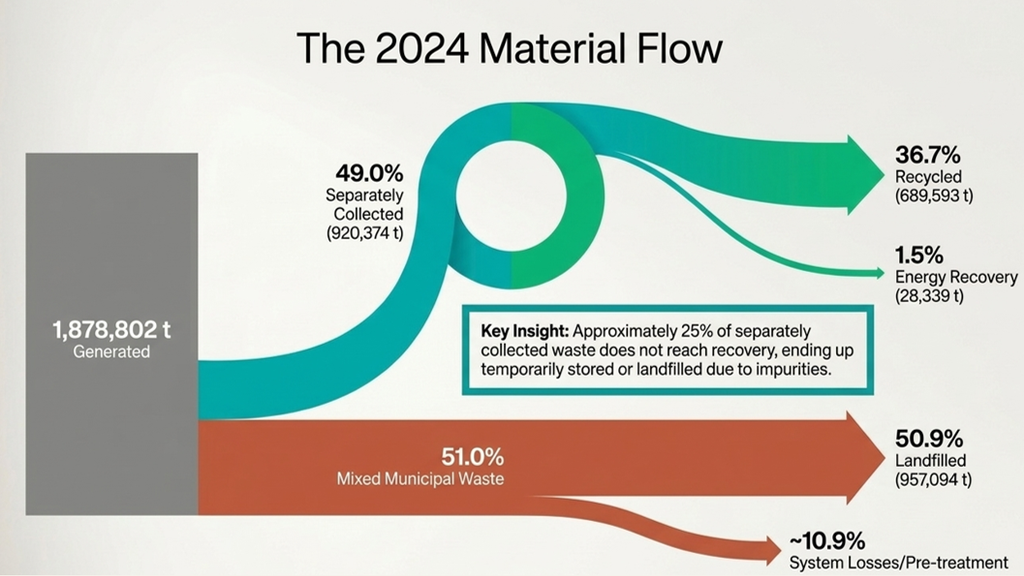
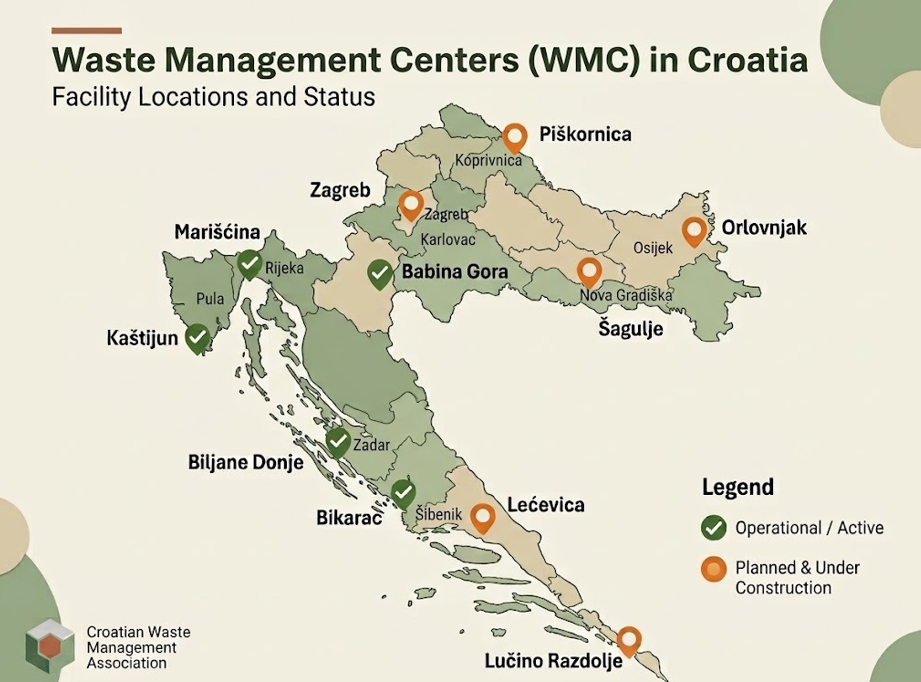
Croatia – Lana Krišto, Chairman of HUGO/CROWMA, described the 2024 situation as a combination of system-level progress and persistent structural barriers. Waste generation has largely decoupled from economic growth since 2017, and the separate collection rate has risen to 49%; actual recycling, however, was only 36.7%. One reason for the gap is that approximately one quarter of separately collected material is contaminated; modern sorting capacity and domestic processing capacity are also lacking. The main lesson from the presentation was that distributing collection bins is not enough on its own: clean material streams, regional waste-management centres, sorting plants and a functioning secondary-raw-material market are needed if Croatia is to reduce landfilling below 10% by 2035.
Hungary – Erika Horváth, Managing Director of Klarwin Hungary Ltd., presented leachate treatment as a complete water-management chain. Reverse osmosis separates a wide range of salts and organic and inorganic micropollutants, but creates two regulated outputs: controlled-quality permeate and concentrate requiring further treatment. Subject to appropriate permitting and quality control, treated water can be recirculated for road washing on site, dust suppression or as process water in composting. A complete mass balance is particularly important for PFAS compounds: in a study of 15 full-scale facilities, RO systems reduced the sum of the 26 measured PFAS compounds in the permeate by 98–99%, but the pollutants were not destroyed; they were transferred to the concentrate. Safe management of that concentrate is therefore an inseparable part of the solution.
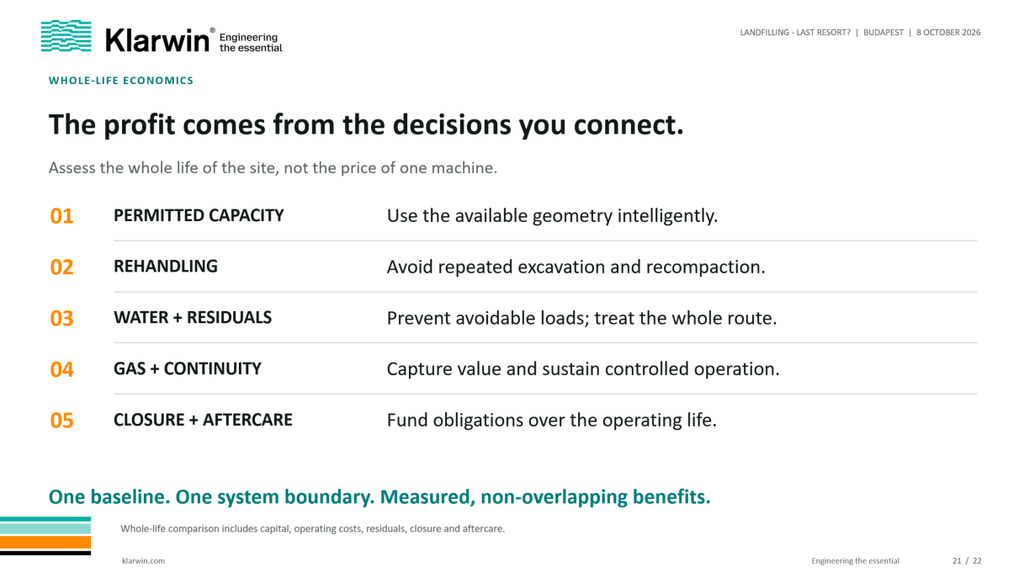
Romania – Lucian Pavel, Environmental Manager at Klarwin Romania, showed that cost-effective landfilling depends not on a single piece of equipment but on coordinating design, operation and closure. Their practical estimates indicate that suboptimal filling can leave 30–50% of usable capacity unutilised, while poorly planned filling sequences may require 20–30% of the waste to be moved later. The uncovered active area should preferably be limited to 1,000–2,000 m²: 20 millimetres of rain produces 20 m³ of water requiring treatment over 1,000 m², but 200 m³ over 10,000 m². The presentation brought digital terrain modelling, measurement of compaction and settlement, coordination of leachate and gas management, and financing of closure and aftercare costs during operation into a single lifecycle approach.
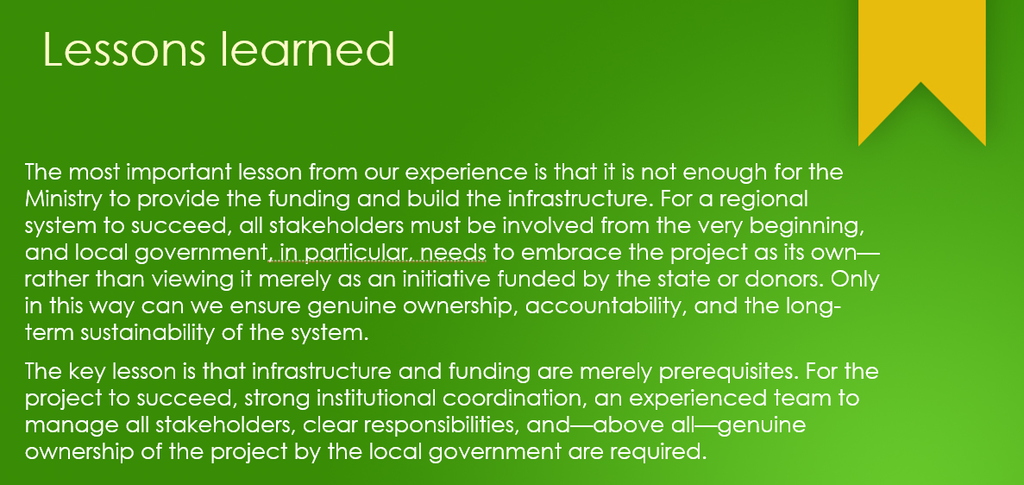
North Macedonia – MSc Ana Karanfilova Maznevska, Head of the Waste Management Department, Environmental Administration, Ministry of Environment and Physical Planning, Republic of North Macedonia, explained that the EU candidate country must invest substantial sums in regional landfills, transfer stations, and collection and treatment infrastructure. Financing must combine EU grants, loans from international financial institutions, and national contributions, but operating, closure and aftercare costs must be covered from the outset. The main causes of delay are site selection, land acquisition, design documentation, public procurement and unclear institutional responsibilities; she therefore recommended parallel procedures and a dedicated project task force. Her most important lesson was that infrastructure and funding are only prerequisites: a durable system emerges when municipalities take ownership of the project and the regional operator, tariffs, collection, transport and transfer arrangements are developed together.
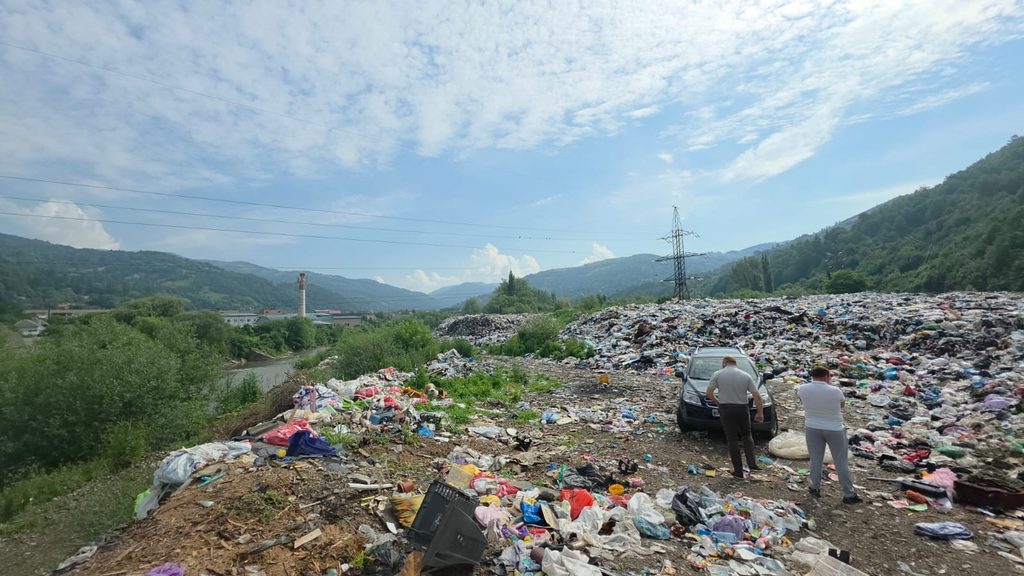
Ukraine – Nataliia Rizak presented the Rakhiv landfill as a transboundary risk to the Tisza River. The officially 0.83-hectare site, containing approximately 15,800 tonnes of waste, is confined between the riverbank and the railway; its river-facing slope is about eight metres high, and it has neither engineered lining nor leachate collection. Although it was formally closed in 2004, it continued to grow in the absence of an alternative: its area expanded to 1.19 hectares by 2020 and 1.27 hectares by 2021. Located approximately 40 kilometres from the EU border, the site is at risk of being washed out during a flood. The community generates 9,000–10,000 tonnes of household waste annually; the regional plan therefore provides for a Rakhiv transfer and sorting station with an annual capacity of 10,000 tonnes, together with the mechanical-biological treatment plant and regional landfill at Solotvyno, 48 kilometres away. Remediation can begin only after this legal route has been established.
Montenegro – Veselin Šturanović, Executive Director of FORS Montenegro, illustrated the severity of the starting position with a single figure: in 2024, 91.6% of treated municipal waste was landfilled, while the EU target for 2035 is no more than 10%. The country has set a recycling target of 65%, plans four regional centres in Podgorica, Nikšić, Bijelo Polje and Bar, envisages approximately EUR 400 million in investment, and intends to close and remediate non-compliant disposal sites by 2030. Šturanović nevertheless warned that a regional centre is merely an expensive building if it is not supported by separate collection, transfer and logistics, cost-recovery tariffs, fee collection, skilled staff, data and a secondary-raw-material market. National targets become reality in municipalities, where the system must be operated and maintained for twenty years, energy, fuel and staff must be financed, and public trust must be preserved.
The situation in Hungary
The Hungarian session translated the morning’s international perspectives into domestic practice. László Uhri, Senior Advisor at the Hungarian Ministry for the Living Environment, noted that Hungary generated 414 kilograms of municipal waste per capita in 2024, compared with the EU average of 517 kilograms, but the domestic treatment mix remains unfavourable: 53.2% of municipal waste was landfilled, 33.6% was recycled, and 13.2% was recovered for energy. The landfill rate remained above 50% every year from 2019 to 2024, while the EU target is no more than 10% by 2035; with a conditional derogation, the limits would be 25% in 2035 and 10% in 2040.
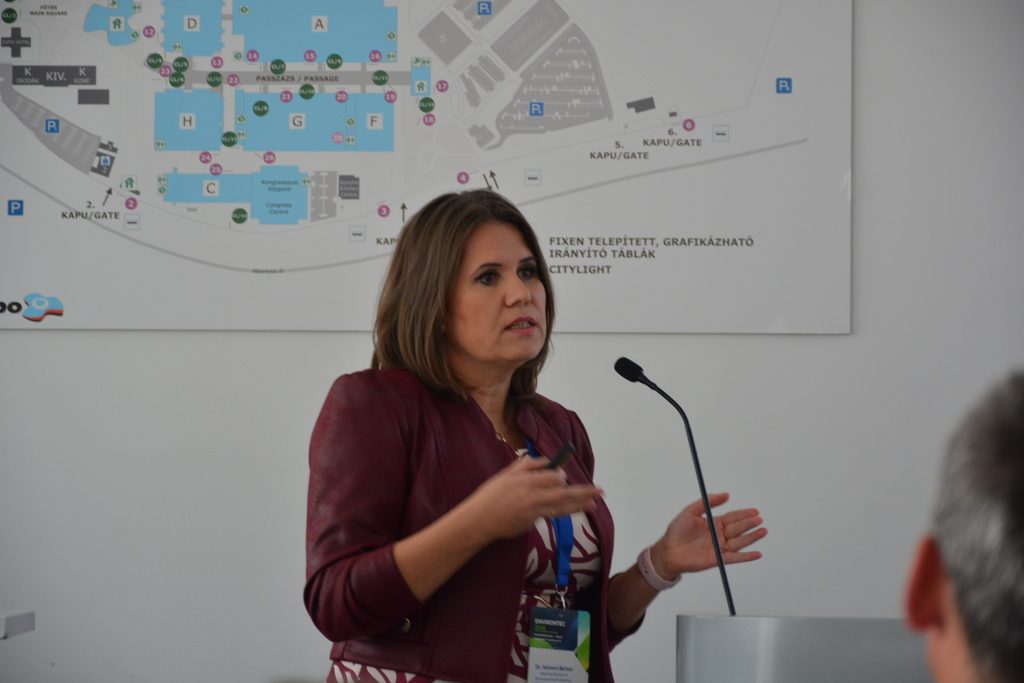
Dr Adrienn Bartus, Division Director at the National Division of Environmental Protection, Nature Conservation and Waste Management, presented enforcement experience relating to the landfill levy and financial provisions. The HUF 6,000-per-tonne levy generates around HUF 15.5 billion annually and covers 89 landfill sites operated by 61 companies. Infringements are found in nearly 70% of inspections, most commonly involving weighing, waste records and camera systems. Continuous surveillance has therefore been mandatory since 2023, while financial provisions must cover future remediation, aftercare and environmental damage.
Miklós Piskolczi, Director of Coordination and Investments at A.K.S.D. Urban Management Ltd., stressed from an operator’s perspective that a significant share of the material remaining after municipal-waste pre-treatment still ends up in landfill. The Debrecen example demonstrates the enduring capacity required for safe final disposal: developed in several phases since 1993, the landfill currently covers 18.97 hectares, has a total developed capacity of 3,860,828 m³, and had received more than 5.25 million tonnes of waste by the end of 2025. The role of the B3-category landfill therefore cannot be limited to mixed municipal waste: it also accepts pre-treated sewage sludge and other non-hazardous residues that cannot currently be recovered, under controlled conditions.
One of the session’s messages was therefore that landfills will remain indispensable for the foreseeable future. The task is not to eliminate landfills, but to ensure that only residual material that cannot be treated elsewhere is deposited there. In the words of Miklós Piskolczi: “A modern landfill is not a failure of waste management, but the safe endpoint of the circular economy.”
Tivadar Runtág, Strategy & Sustainability Director at MOHU MOL Zrt., warned that a significant share of operating landfills is approaching full capacity, while landfilling is declining only moderately. A sustainable landfill sits at the bottom of the waste hierarchy, yet remains indispensable: sufficient, appropriately located capacity that can operate over the long term in environmental and economic terms is required. Its safety depends on the combined application of acceptance controls, pre-treatment, compliant deposition, compaction and covering, leachate and landfill-gas management, remediation, and continuous monitoring. All this requires substantial investment and long-term predictability; landfill fees and financial provisions must therefore pre-finance 30–50 years of aftercare following closure.
Attila Maxim Ferenczi, founder of Reco Waste Management Ltd., pointed out that municipal waste charges have remained unchanged since 2012, making it cheaper for waste generators to place everything in municipal waste. Well-targeted interventions, however, can divert a significant share of waste from landfill. Ferenczi illustrated how facility-level waste audits reduced the amount disposed of in landfill for several clients while also saving them money.
Norbert Höflinger, Chair of the Environmental Protection and Waste Management Section of VOSZ – National Association of Entrepreneurs and Employers (Hungary), called for the “diversion of appliances”: electronic waste should be directed towards modern dismantling and processing facilities before it reaches the landfill gate. In Hungary, 94,000 tonnes of e-waste, or 9.8 kilograms per capita, was collected in 2022, compared with the EU average of 11.2 kilograms; 79.3% of the collected amount was recovered. In the absence of Hungarian measurements, international studies suggest that e-waste may account for 0.3–1% of mixed waste, representing approximately 8,000–27,000 tonnes of lost material each year within Hungary’s roughly 2.7-million-tonne mixed-waste stream. These devices can release heavy metals and brominated flame retardants into leachate, while their lithium-ion batteries can cause fires that are difficult to extinguish; at the same time, they contain valuable neodymium, dysprosium, tantalum, cobalt, gold and palladium. VOSZ therefore proposed a radical expansion of postal, retail and office take-back points, stronger education and enforcement, and targeted research, development and industrial programmes.
nternational participation and a South-Eastern European perspective
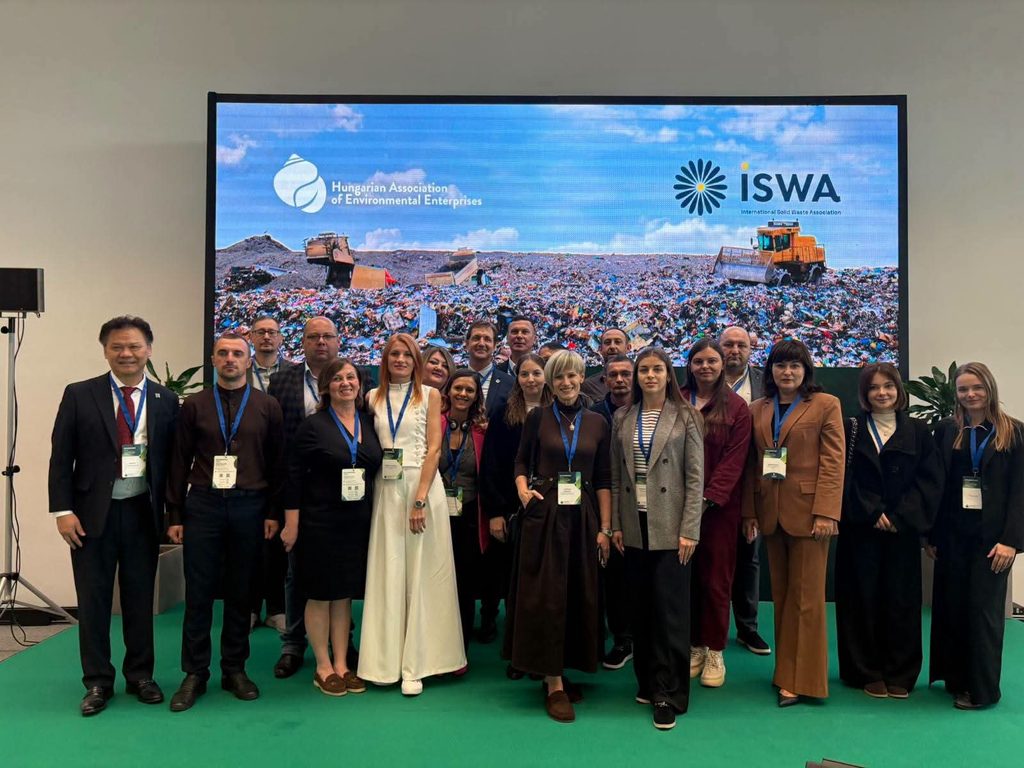
One of the conference’s greatest strengths was its international participation. It was remarkable to have so many speakers from abroad at an event in Budapest. The afternoon’s international session presented the situations in Croatia, Romania, North Macedonia, Ukraine and Montenegro. This created a rare opportunity for Hungarian waste-management professionals to compare their position not only with frequently cited Western and Northern European models, but also with South-Eastern European countries facing similar circumstances. According to Aleksandra Vučić Anić, countries in the region regularly look to Denmark or the Netherlands as examples, but their systems cannot simply be copied, and their per-capita waste generation is also considerably higher. The regional examples showed that official recovery data often conceal operational difficulties, data gaps and efforts to avoid sanctions. In conclusion, the conference provided a comprehensive picture of where Hungary and South-Eastern Europe stand in reducing landfilling and which tools are available to reach the EU’s 2035 target. The professional answer to the title’s question was broadly consistent: in the long term, landfilling must indeed become the last resort, but for the foreseeable future a modern, technically compliant landfill will remain an indispensable element of the system. Because of treatment residues, waste that cannot be recovered elsewhere, and the regions’ differing starting points, attention shifted from eliminating landfills to redefining their role.
The conference delivered four key professional messages:
Regulation: the forthcoming EU BREF will introduce stricter technical and aftercare requirements. EPR systems must also operate genuinely and transparently if they are to divert waste from landfill. Economic incentives: landfill levies, quantity-based charging and full-cost-recovery fees are indispensable for sustainable operation and maintaining environmental standards. Technology: digital measurement and data management, continuous monitoring, modern closure solutions and separate biowaste treatment all entail costs, but they cannot be avoided. Financing and planning: landfill closure and aftercare are obligations extending over decades, requiring predictable regulation, adequate financial provisions and well-prepared projects.
The dialogue will continue. HAEE will represent Hungary at the ISWA World Congress in November as a speaker and active participant, while regional experts will meet in Zagreb from 6 to 9 December, where regulatory infringements and illegal waste trafficking will be the main topics.
GOLD SPONSORS:


BRONZE SPONSORS: