
The ISWA World Congress 2026 has evolved far beyond a conventional waste-management conference. It is now one of the international community’s most important annual meeting points for resource management and the circular economy. Held in London from 9 to 11 November and hosted by the Chartered Institution of Wastes Management (CIWM) in partnership with the International Solid Waste Association (ISWA), the Congress demonstrated that waste management is no longer merely a technological issue.
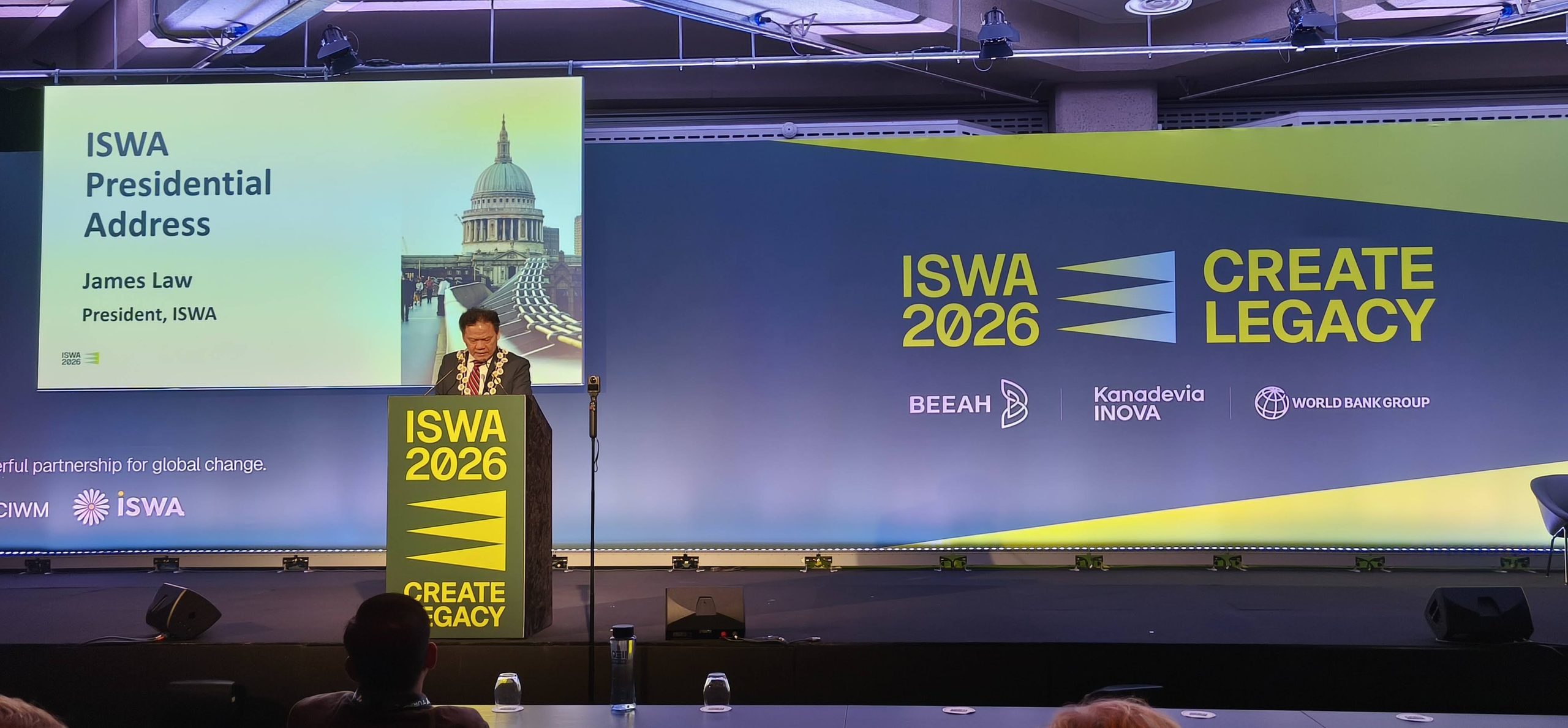
It is inseparable from climate action, resource efficiency, social justice, public health, water protection, financing and international cooperation. The official programme was structured around five overarching themes: human rights, political commitment, waste management planning, the economics of waste and resource management, and the circular economy. The event also highlighted the sector’s expanding toolkit. Alongside established approaches such as composting, digital solutions are gaining prominence. During the opening panel on day two, for example, Zagreb’s municipal service provider described partnerships aimed at improving operational processes through digitalisation and artificial intelligence.
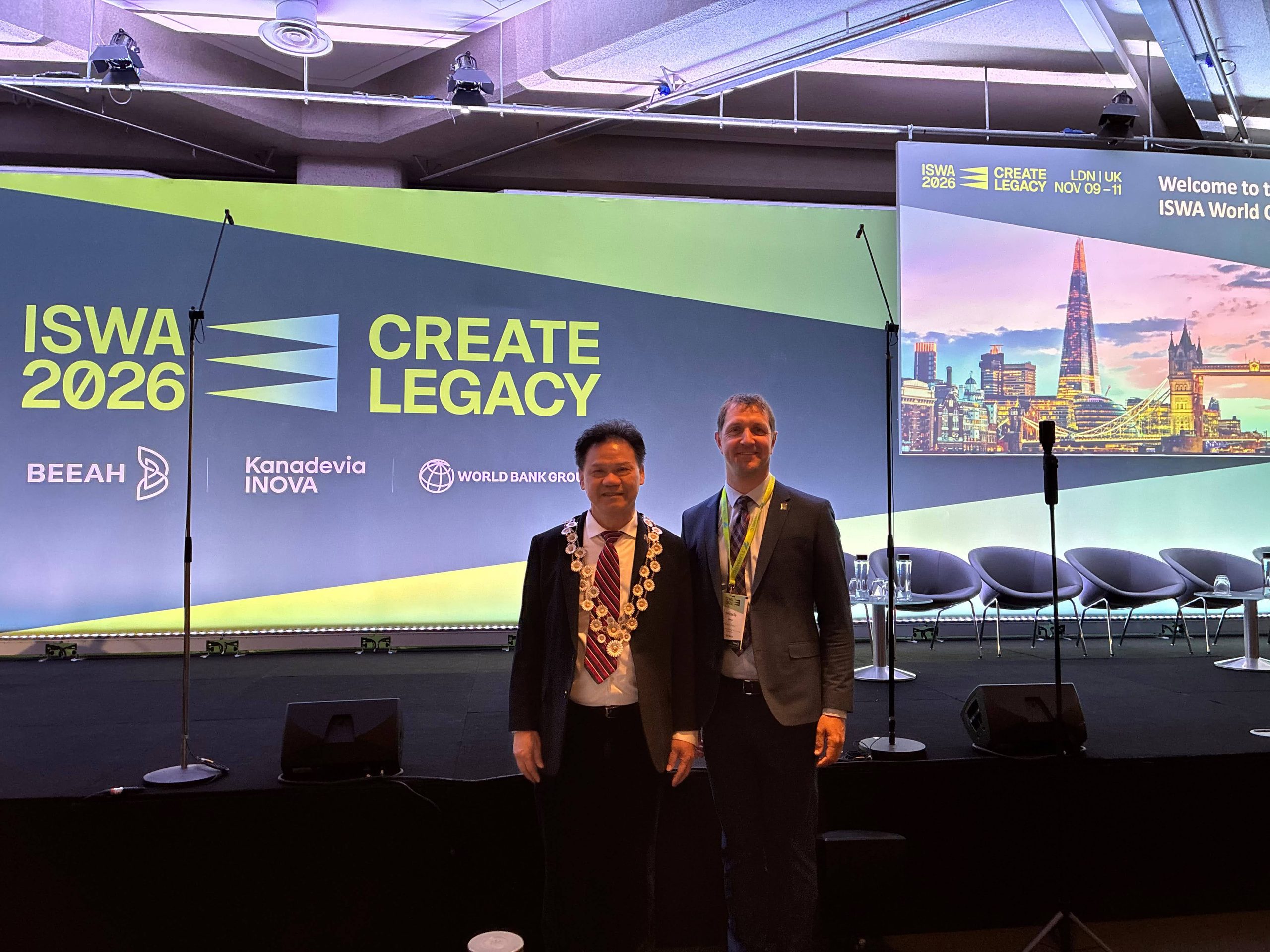
The Hungarian Association of Environmental Enterprises (HAEE) participated as Hungary’s ISWA National Member. In addition to the ISWA General Assembly, we joined the in-person meetings of the Working Group on Communication and Social Issues and the Working Group on Climate Change and Waste Management. We also presented Central European and Carpathian Basin experience within the technical programme. Notably, two Hungarian experts were among approximately 300 speakers.
The Congress in numbers
- 917 participants from more than 61 countries
- 300 speakers selected from 443 submitted abstracts
- 9 parallel technical tracks
- More than 130 technical sessions
- 21 exhibitors and 22 sponsors
- 5 technical site visits
More important than the figures themselves was the meeting of very different national realities. Delegates came both from countries with advanced circular systems and from regions where basic waste collection is still unavailable to parts of the population. According to the Congress background materials, global municipal solid waste generation could rise from 2.1 billion tonnes in 2023 to 3.8 billion tonnes by 2050, requiring finance and infrastructure to grow accordingly.
The Thames: environmental damage can be reversed
One of the defining ideas of the opening programme concerned the River Thames. The Congress took place close to its banks, next to Westminster Abbey. London’s origins and development are inseparable from the river, yet for centuries the Thames also served as the receiving body for the city’s pollution.
The construction of London’s nineteenth-century sewer network was a historic public-health and engineering achievement. However, it did not eliminate pollution by itself; in part, it merely moved the discharge point downstream. The lesson remains relevant today: relocating an environmental problem is not the same as solving it.

The Thames nevertheless offers grounds for optimism. Its ecological condition has improved dramatically through sustained intervention. The river’s recovery shows that earlier environmental mistakes can be corrected, but only through long-term political commitment, appropriate infrastructure, finance, enforcement and public support.
Resource efficiency: turning waste back into resources
A recurring message throughout the Congress was that the future of waste management cannot be built solely around treating waste after it has been generated. The aim must be to reduce the use of primary raw materials, extend product lifetimes, increase reuse and retain materials in circulation at the highest possible value. This becomes even more urgent as global waste generation continues to rise rapidly.
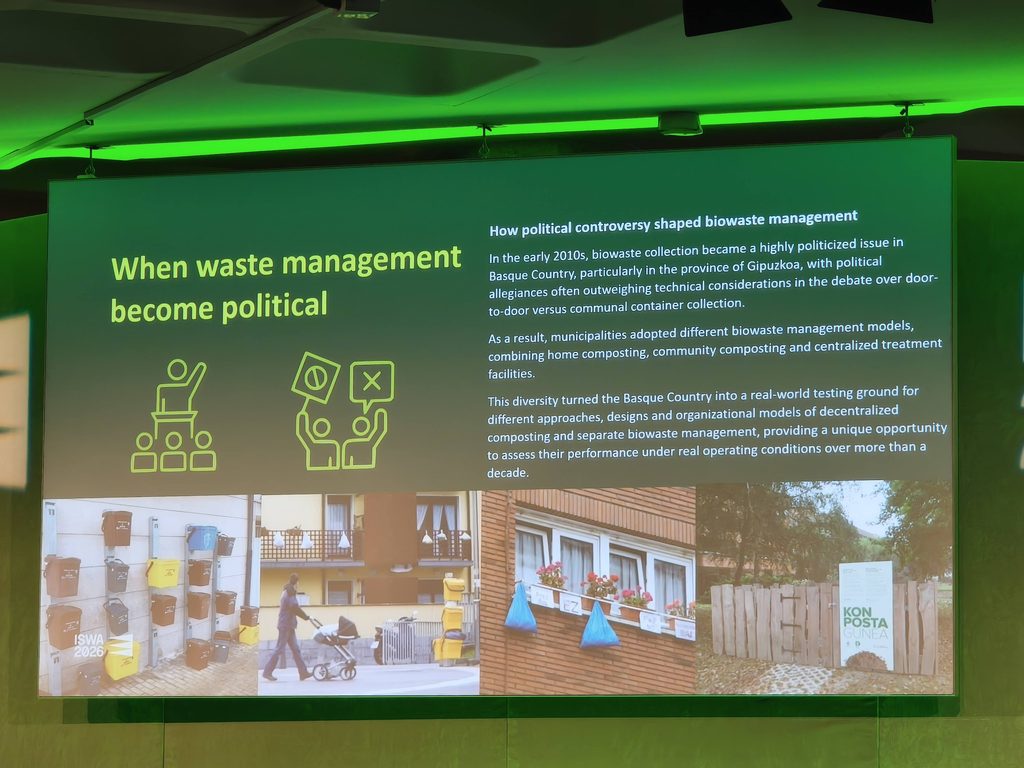
Modern biowaste management and composting were recurring themes in plenary and technical sessions. Evidence from the Basque Country showed that effective source separation, local treatment, and active public participation can return a significant share of organic waste to the biological cycle. The key is not to mechanically replicate a single model but to adapt it to local conditions: dense urban areas, smaller settlements, and rural regions require different solutions.
Italian experience illustrated the scale of the opportunity. Potential household food waste was estimated at around 127.7 kg per person per year, while separate biowaste collection has been mandatory since 2021. Across Italy, separate collection reached 67.7% in 2024, and organic-waste collection above 80 kg per person per year was presented as a major achievement.
The conclusion is clear: organic waste is not merely a residual stream to be managed. It is an important resource for replenishing soil organic matter, producing compost and, where appropriate, generating biogas.
Plastic pollution does not stop at administrative borders
Global plastic pollution and the emerging international plastics treaty were prominent, though not exclusive, themes. Across sessions, a common message emerged: plastic pollution cannot be treated as a stand-alone marine-litter or waste-management issue. It results from combined shortcomings in production, consumption, collection, financing and enforcement.
Once a plastic product escapes the regulated waste-management system, it can rapidly become mobile, transboundary pollution. Land-based waste enters watercourses, becomes riverine and eventually marine litter, while larger plastic items gradually fragment into microplastics and nanoplastics that are far more difficult to remove.
This is directly connected to Hungarian experience in the Tisza River basin. Riverine waste pollution is not the problem of one municipality or one country. Pollution moves, so solutions must operate at catchment scale and across borders. Riverbanks are estimated to be roughly ten times longer than coastlines, which is why HAEE worked through ISWA and the relevant Hungarian ministry to ensure that riverbanks were explicitly reflected in the developing Plastics Treaty text.
We do not always need more information, but better information
A session on the science-policy interface provided an important counterpoint to the problem of missing data. While major data gaps persist across waste management, the scientific community is simultaneously producing an overwhelming volume of publications. This can create an ‘information fog’ in which decision-makers struggle to identify what is relevant, reliable and actionable.
One possible response discussed was ‘slow science’: replacing the race for publication volume with more time for verification, synthesis, quality assurance and the translation of research into accessible policy knowledge. The challenge is paradoxical. We must close critical data gaps while also cutting through the fog created by too much information. Trust is fundamental to both tasks.
The same principle applies to discussions of artificial intelligence. AI can help process, structure, and analyse large datasets, but it cannot replace source criticism or scientific quality assurance. In the age of AI, reliable, traceable, and well-structured knowledge is even more valuable.
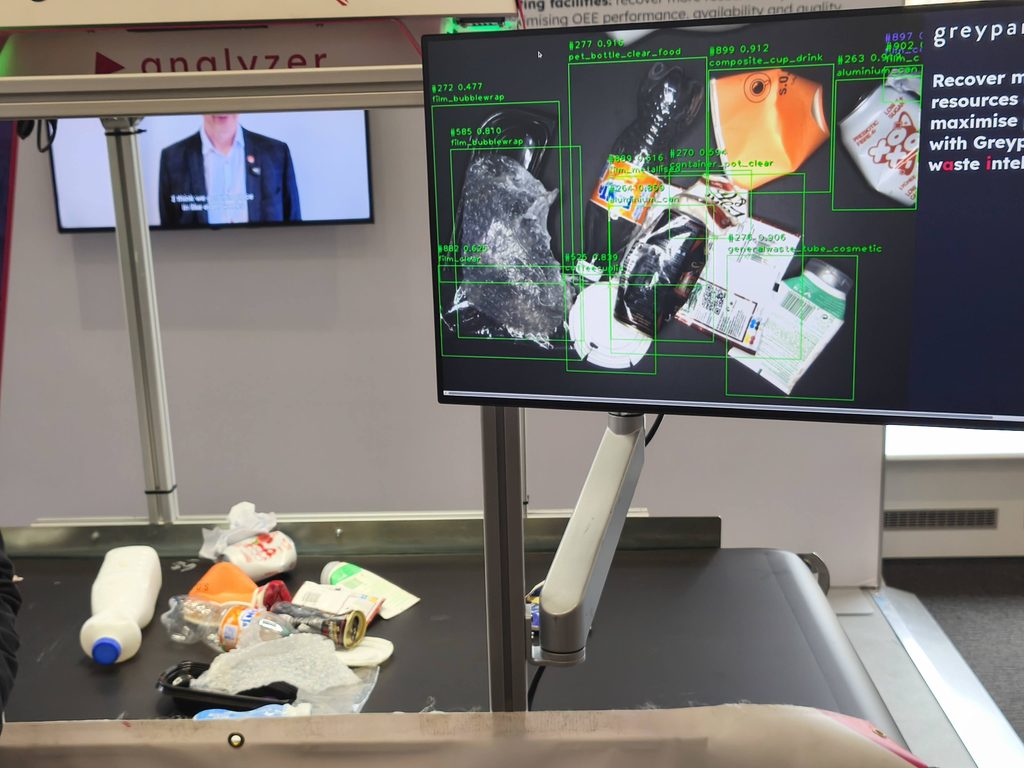
AI was also visible among the exhibitors. Greyparrot, for example, demonstrated a camera-based recognition system capable of increasingly detailed identification of packaging, including its producer or brand.
Making the invisible visible
Two Hungarian presentations addressed this challenge from different perspectives.
László Uhri, an expert representing Hungary’s ministry responsible for the living environment, presented experience with the WasteRadar application and potential future developments. The system links the national ‘Let’s Clean Up the Country!’ programme to a citizen-reporting tool that lets users submit photographs and precise locations of illegally dumped waste. These reports help identify sites and organise clean-up operations. Proposed developments include geospatial data and LiDAR surveys to detect dumpsites not reported by the public.
The second Hungarian presentation was delivered by Gergely Hankó on behalf of HAEE. It argued that ambitious circular-economy targets can only be credible if they also confront waste flows that fall outside the system, remain undocumented or are managed improperly.
The concept of ‘shadow waste’ captures less visible waste flows that official statistics do not fully represent. Statistics mainly show what the formal system collects, records and treats. We know far less about waste that never reaches authorised facilities, is dumped illegally, burned without control or carried across national borders by rivers.
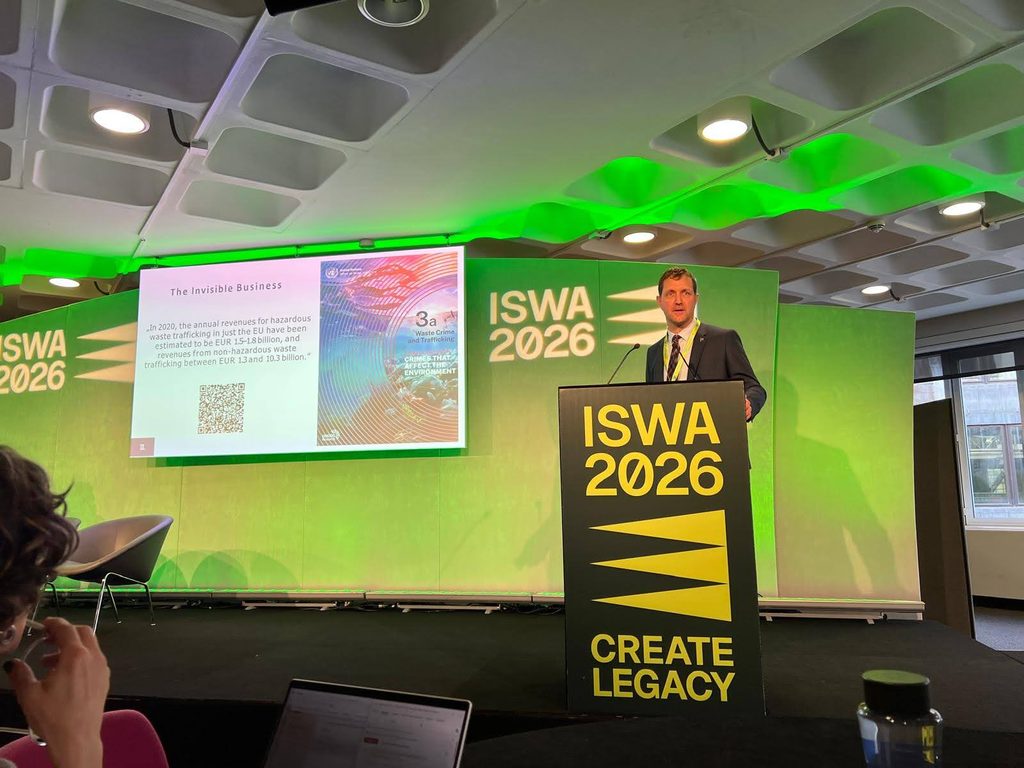
The central message was that we must make the invisible visible. Better data, harmonised monitoring methods, stronger traceability and cross-border data sharing are essential. Data gaps are not simply a statistical problem. If we do not know where and in what quantities waste escapes the system, we cannot assess the real performance of the circular economy.
Hungary may gain a new opportunity through the National Authority for the Supervision of the Living Environment, scheduled to begin operating on 1 January 2027 under Government Decree 412/2026 (XI. 5.). Its remit includes environmental and waste-management authority functions, with a territorial authority system planned from 1 July 2027. A strong, unified and professionally independent supervisory framework could improve not only enforcement but also the reliability and comparability of data and the identification of real waste flows.
We brought the same perspective to the ISWA General Assembly, emphasising that ISWA’s forthcoming strategy should address data gaps, data uncertainty and waste flows that remain outside formal systems. These challenges are significant not only in developing economies but also in Central Europe.
EPR: a bridge from policy to implementation
Extended Producer Responsibility (EPR) featured prominently in several sessions. The shared technical message was that, when well designed, EPR performs two important functions. It finances the necessary costs of collection, sorting, reuse, recycling and safe treatment, while eco-modulated fees can also influence product design.
EPR, however, cannot be applied identically everywhere. System design must reflect local waste streams, existing infrastructure, institutional capacity, markets and socio-economic conditions. One of the Congress’s recurring lessons was therefore that global ambition must be translated into solutions that work locally.
International presence and cooperation
Alongside the technical programme, personal meetings and networking were equally important. At the ISWA General Assembly, we represented Hungarian interests and the perspectives of the domestic professional community. The Working Group on Communication and Social Issues focused on making technical results more accessible, strengthening the visibility of national members and connecting global and local communication.
László Mátyás of Envecon Ltd. has been contributing for several months to ISWA’s Working Group on Climate Change and Waste Management. Under the dedicated programme ‘Connecting London to Antalya: Waste & Resource Management as Climate Action at COP31’, the group finalised a formal high-level declaration for the COP31 climate summit in Antalya, Türkiye. The declaration highlights opportunities to reduce methane emissions from landfill gas and other waste-treatment activities, as well as the urgent need to address uncontrolled waste burning. It also calls for landfill-gas mitigation to be better integrated into climate-finance mechanisms. Beyond the global environmental benefits, this could mobilise additional resources for the waste-management industry and the investments required for implementation. ISWA-Climate-Change-Declaration-2026-Endorsed.pdf
Perhaps the most important lesson from London was that, although waste systems differ greatly in maturity across the world, their fundamental challenges are connected. Rising consumption, resource waste, incomplete collection, underfunded infrastructure, illegal waste management, data gaps and transboundary pollution are different manifestations of the same global system failure.
Closing the loop therefore requires more than setting new targets. We need to understand real material flows, expose the system’s blind spots, treat today’s waste as a resource, support prevention and reuse alongside recovery, and make visible what currently remains outside official statistics. Only then can global ambition become practical, locally effective action.
Further coverage of the Congress
Day 1: https://www.circularonline.co.uk/news/live-iswa-world-congress-london-2026/
Day 2: https://www.circularonline.co.uk/news/live-iswa-world-congress-london-2026-day-2/
Day 3: https://www.circularonline.co.uk/news/live-iswa-world-congress-london-2026-day-3/
See you in Rotterdam next year!