
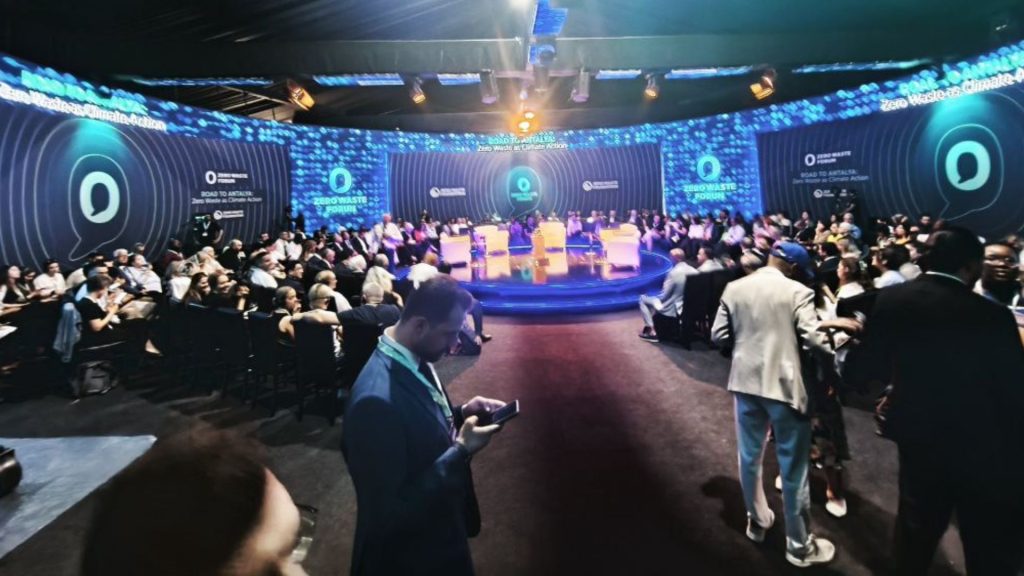
The Road to Antalya – Zero Waste as Climate Action forum concluded with a strong and practical message: waste prevention and material preservation have a direct climate impact, and transformations in urban, industrial, and energy infrastructure must now prioritize circularity and the closing of material loops. The Global Zero Waste Forum 2026 took place in Istanbul and, as part of the preparations for the COP31 climate summit, brought together ministers, city leaders, civil society actors, and experts to develop feasible and measurable zero waste pathways. We were invited in our capacity as KSZGYSZ (HAEE), the Hungarian chapter of ISWA; the experience and connections gained at the forum will be directly valuable for domestic strategic work and for initiatives linked to COP31. It is also worth highlighting that the event took place at a very high level, with the leaders of international organizations participating in person and remaining available throughout the entire weekend, from morning until evening.
What zero waste means
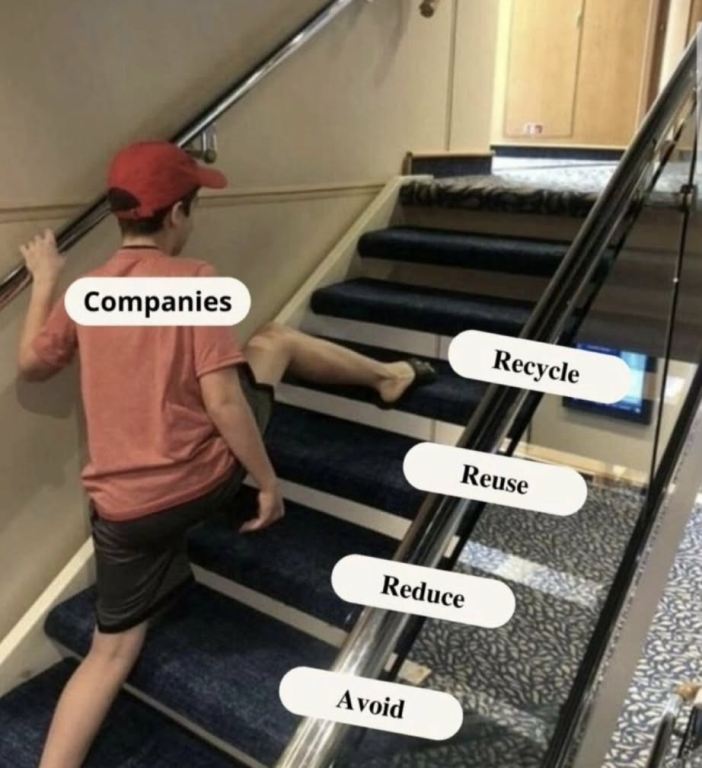
“From a zero waste perspective, the priority is not simply to manage waste better after it has been created. It is to prevent waste in the first place, redesign material flows, keep resources in use, and phase out practices that lock societies into disposal.” This framing guided the opening debate: zero waste is a systems approach focused on prevention, material preservation and climate-aware decision-making.
IPCC message and plastics in the climate budget
The IPCC indicates a 67% chance of staying below 1.5 °C if cumulative CO2 emissions remain under 400 GtCO2. Plastics-related emissions can rapidly deplete this budget without radical lifecycle changes.
Measuring progress – Zero Waste Index 2.0 and city examples
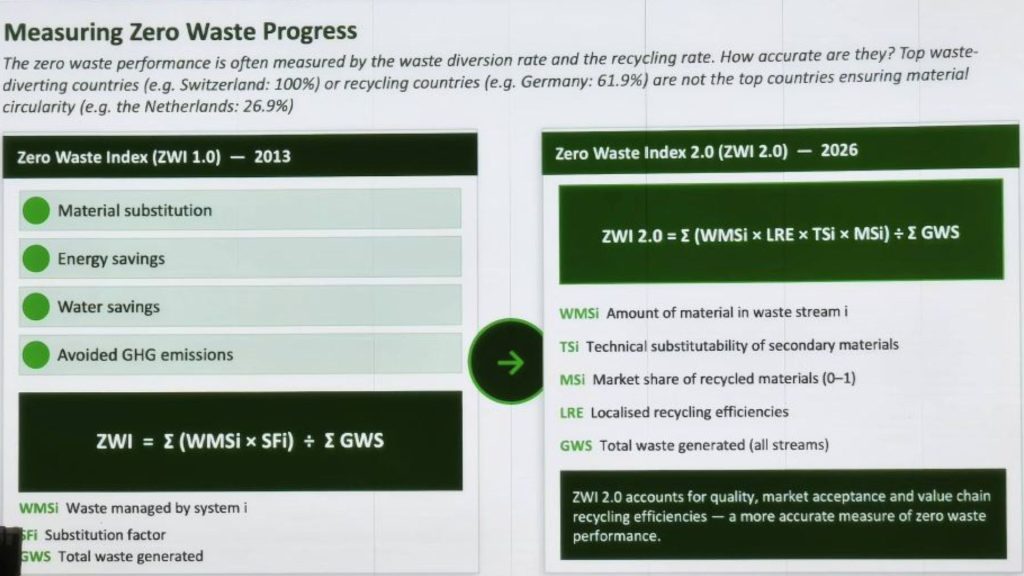
ZWI 2.0 refines performance measurement by accounting for local recycling efficiencies, technical substitutability and market uptake: ZWI 2.0 = Σ (WMSi × LRE × TSi × MSi) ÷ Σ GWS. City examples illustrate the difference: Stockholm ZWI 5.9% – GHG avoided 597 kg/person/year; Shanghai ZWI 9.4% – GHG avoided 407 kg/person/year; Adelaide ZWI 8.2% – GHG avoided 406 kg/person/year. These values show that high diversion rates do not automatically translate into material substitution or climate benefit – quality and market integration matter.
Organics – the largest climate-relevant fraction
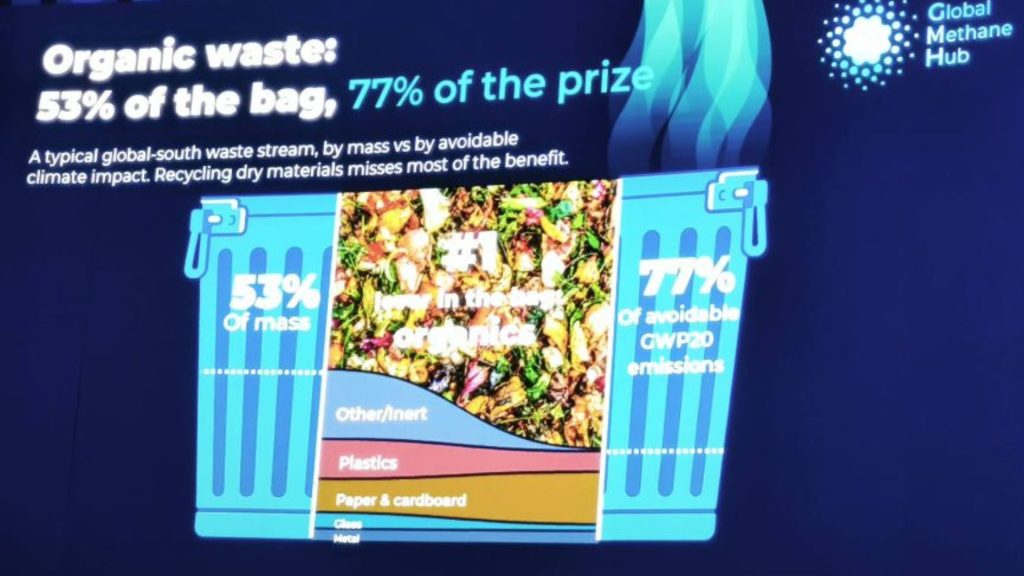
In a typical global-south waste stream, organics represent about 53% of mass but account for 77% of avoidable GWP20 emissions. This means dry-material recycling alone misses most climate benefits – source reduction, local composting and anaerobic treatment are priorities.
Construction and demolition – the sleeping giant
Construction and demolition materials are among the largest waste streams in many economies, yet they often receive less public attention than packaging or consumer waste. The forum emphasized deconstructability requirements, demolition audits, adaptive reuse and secondary material markets – measures that reduce emissions while preserving built-environment value.
Informal sector, energy infrastructure, tourism and rights
Integrating informal recyclers into urban infrastructure – legal protection, cooperative models and safety -improves system performance and equity. Designing green energy infrastructure – EV batteries, solar panels – for second life and collection chains is essential. In tourism, procurement, refill systems and local partnerships prevent waste export. Right-to-repair and digital product passports extend product lifetimes.
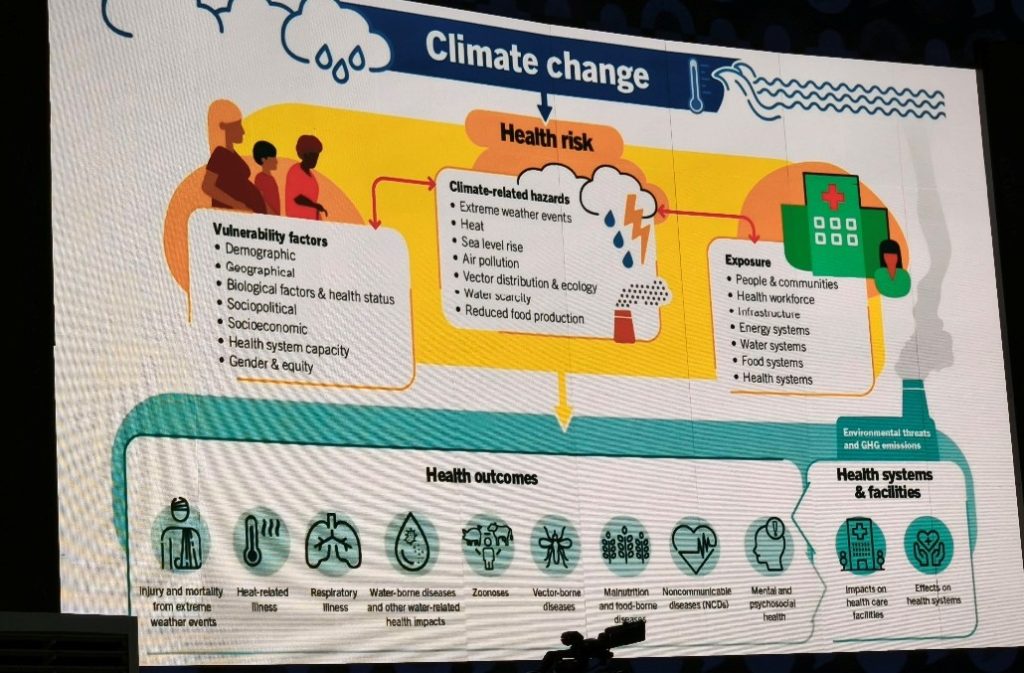
One of the forum’s key lessons was that zero waste can only become genuine climate action if communication, community engagement and infrastructure development reinforce one another. Public discourse, media narratives and visible local opportunities for action strongly influence whether people see change as both achievable and meaningful. This is especially important for young people, who are carrying an increasing burden of climate anxiety, while practical and participatory zero waste solutions can offer a tangible sense of agency. The forum therefore stressed that behaviour change should not be built on guilt, but on usable systems, credible messages and community-based cooperation.
The forum reinforced that zero waste is climate action. On the road to COP31, international commitments must be translated into practical, fundable and locally implementable programs.
More information: Gary Hanko, managing director, HAEE